Tuesday, September 10, 2019

Describing and Explaining the Changes...

Describe the evidence you have so far about the effects of your changed practices or intervention on desired learner outcomes and how you summarised and recorded these...


  1. One evidence I have acquired throughout the year to identify formative feedback of my target students was having a tracking sheet for each term, of their assessment results.

2. Learning Wall - this wall is filled with the students learning from our Monday (whole class) reading sessions. Some of the reading activities we have pursued this term: Word Diagram, Vocabulary Ranking, Analysing Vocabulary, Drawing characters and scenes and Hot-seating etc.

Explain the reflections and tweaks you have made along the way and the reasons why you made these changes. Share your evidence for these decisions...

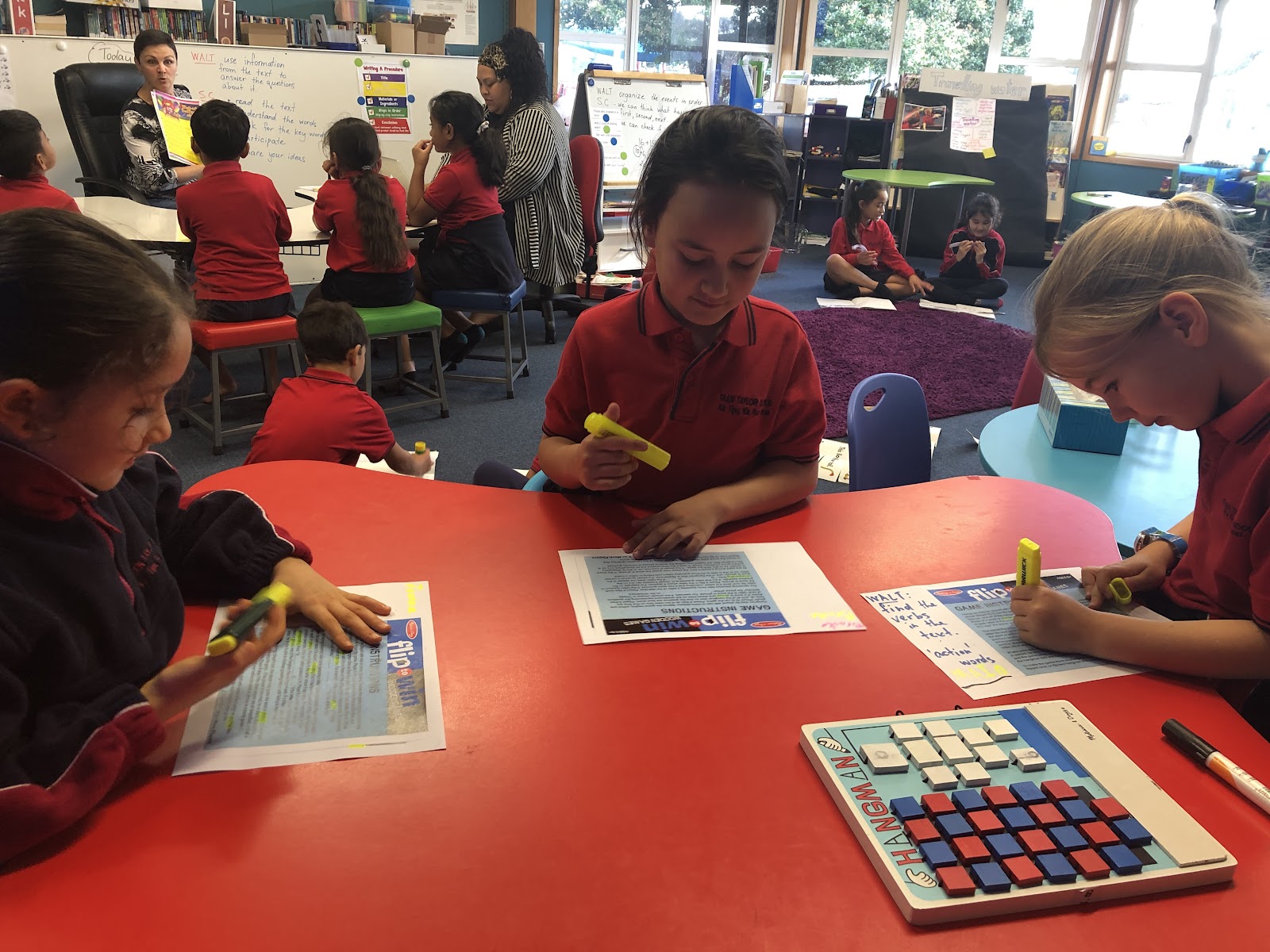
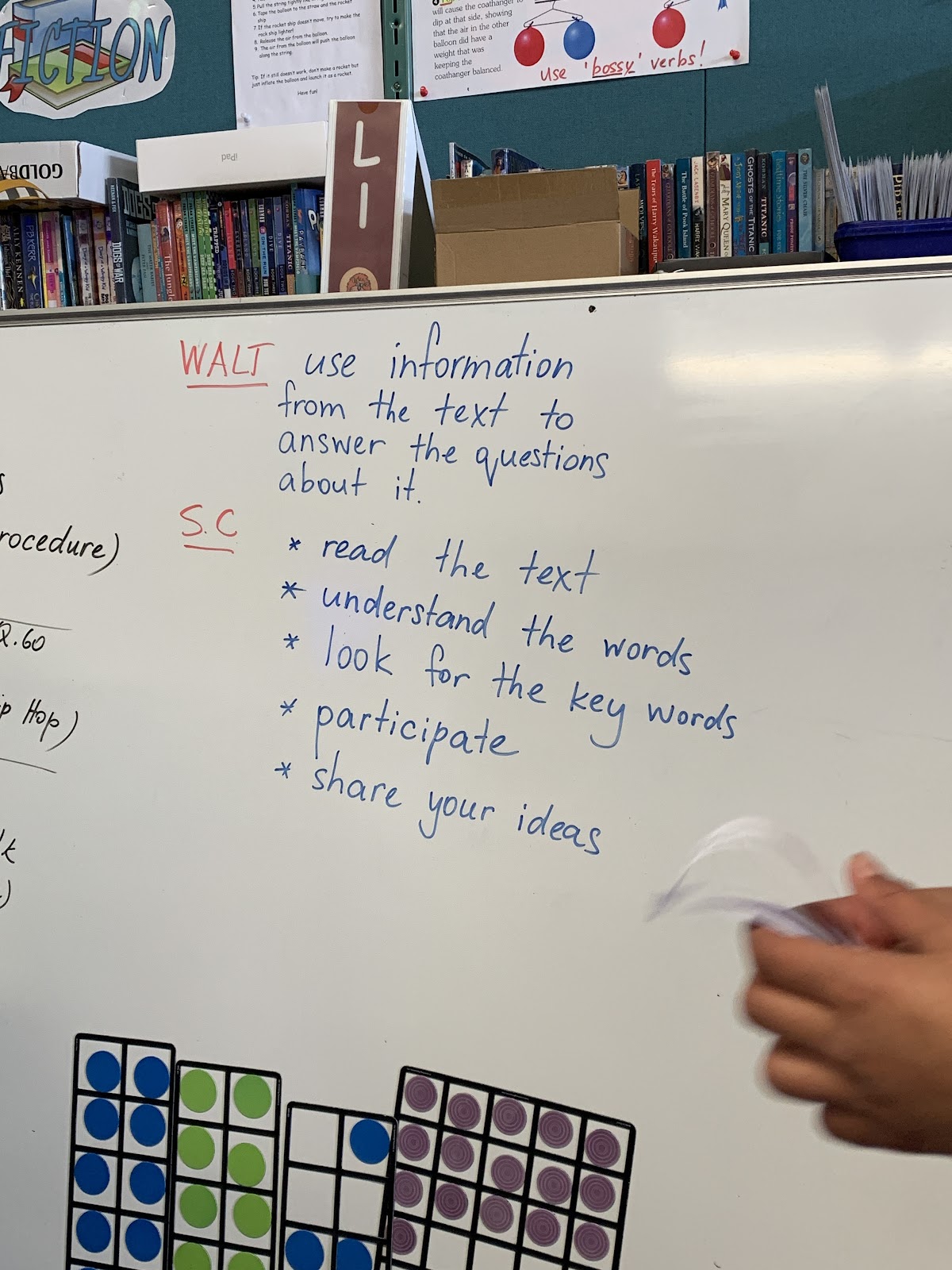
Reading whole-class on Monday: I came across my students assessment results from last term and found 3 areas the whole class needed support in. These areas were: VOCABULARY, INFERENCING AND ACQUIRING INFORMATION. I thought back to my early years of teaching and something my tutor teacher would do was use Monday as a whole class reading day and would teach grammar, vocabulary knowledge etc. That was a lightbulb moment for me and decided to try it this term.
I also took into consideration learner voice and student interest. So I chose a novel that has a movie to go with. The movie is seen as an incentive for when we finish the novel study. This term, I've split the 10 weeks over the 3 areas that needed focus on - Weeks 1-3: VOCABULARY, Week 4-6: INFERENCING, Week 7-10: ACQUIRING INFORMATION (Retrieval skills, skimming & scanning etc).

Student Ownership: Through learner voice feedback, students felt that I needed to give them more of a choice in what they are learning.


So, I created a padlet and asked my class 3 questions: 

  1. What do you enjoy about Reading? 
  2. What text types would you like to read more of? 
  3. What would you like to learn about in Reading next term? 
The responses were great. I had students share that they like how we use different forms of texts for reading (Song lyrics, spoken word poetry, novels, plays etc), I had some students ask for more comic based books, non-fiction books about history and I had some students ask if they can read more about historical events, stories from the islands etc.


Thursday, August 22, 2019

Monitoring evidence, sharing, and interrogation...

Describe how you will regularly monitor shift for learners, as a result of your intervention. This includes collecting, recording and reflecting on the micro-shifts of learners over time

How have you been systematic in that collection?​

- Teacher observations

- Formative Assessments
- Student work
- Student Engagement
- Student Voice

What are you going to do with the data in terms of ‘tweaking’ your intervention?

- Change my Teacher Practice

- Find resources and materials that better cater to the students learning needs

- Communicate with ALL facilitator for support/professional advice

- Professional Readings

- Talanoa with my learners


What does the data tell you?​

- Inferencing, Vocabulary Knowledge and Acquiring Information is an area of weakness for my learners. A change in my Teacher practice I've made since identifying this, is dedicate Monday to whole class sessions. The purpose of this whole class session is to tackle the area of weaknesses. My belief is that Monday creates an opportunity for the whole class to work together on the WALT. Then Tuesday-Friday, I will work in my guided groups and continue to scaffold the WALT from Monday. If I feel the group does not need to be scaffolded, I will find the group another WALT, based on their assessment results.


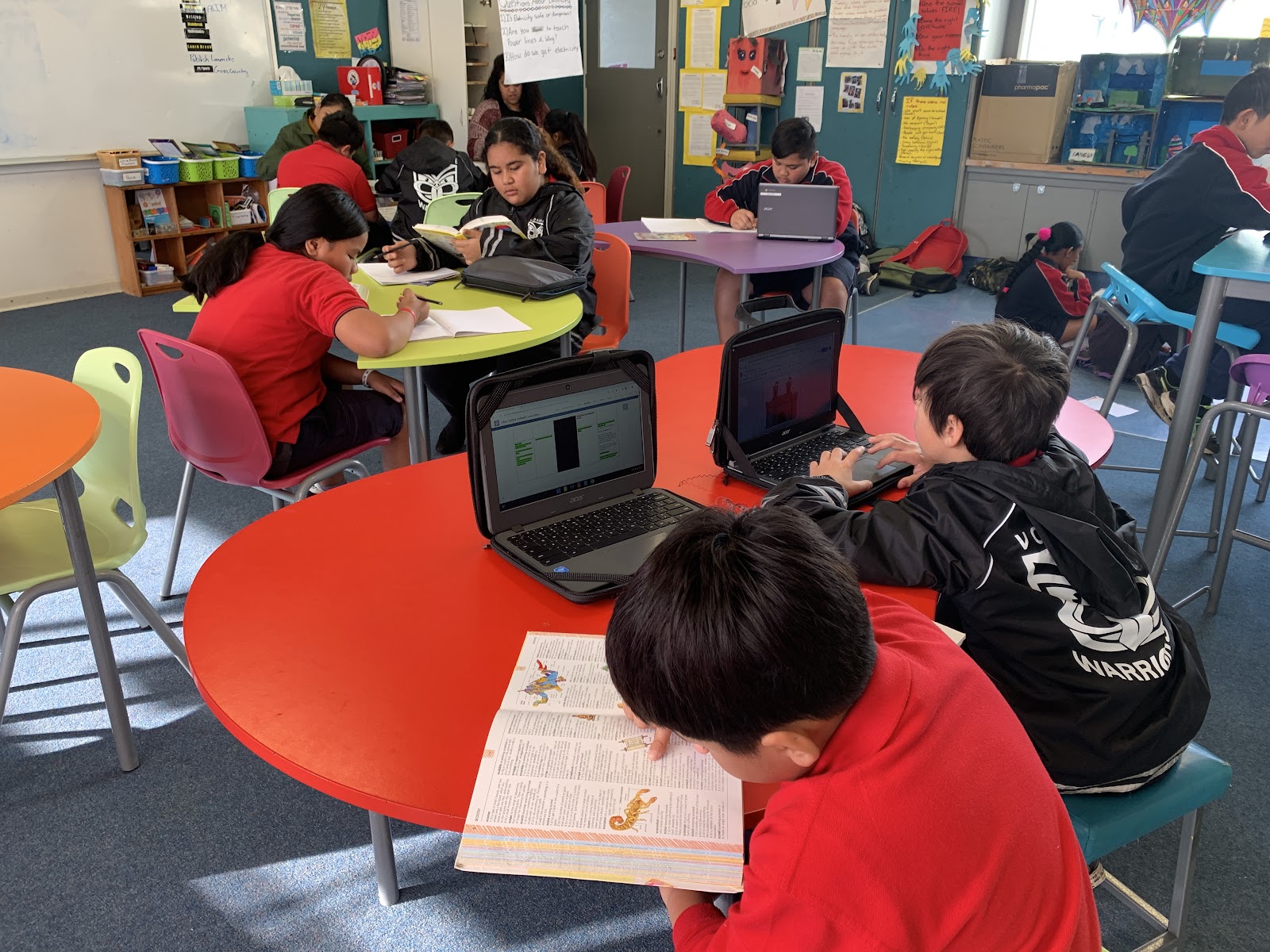
Here is an image of my learners LEARNING WALL and the work they have completed around VOCABULARY, INFERENCING & ACQUIRING INFORMATION.


Wednesday, July 31, 2019

Acts of Service (as CoL)

For our first CoL release this term, we got the opportunity to go into classes at school and observe our teachers do what they do best - TEACHING. The purpose of it was to collect baseline data around reading and how teachers deliver their reading lessons.

We looked out for 3 things:
  1. Independent Activities
  2. Collect Student Voice
  3. Guided Group Lesson
What I took away from this learning opportunity
  1. How are we supporting the teaching and learning of decoding and comprehension strategies?
  2. Are all our teachers confident in teaching reading? (Content Knowledge)
  3. Do our students understand the PURPOSE of what they are learning?
  4. How can we, as CoL within schools teacher, support our teachers to teach Reading?


Thursday, May 2, 2019

Sharing my Hypotheses...


1. Describe your process for developing hypotheses (hunch) e.g. what you read, who you talked with...
  • Change in my teaching practice
  • Change up choice of resources and materials
  • Include student voice
2. Explain the hypotheses about teaching that you decided were MOST worth testing, and why...
What changes can I make in my teaching practice to ensure that I am meeting my students learning needs in Reading. I decided to focus on changing my choice of resources and materials to better suit the students. The first step I did was consult with my students. They told me what types of books they would like to read this term, what text type they prefer to read and what comprehension strategies they need support with.
3. For each of your hypotheses, explain how you will test it and what evidence would support (or refute) that hypothesis...

  • Change in teaching practice: I have been reflecting on some of my lessons and asking my students for feedback on their learning. It's been quite effective being able to monitor what has been successful and what hasn't. I plan to video record myself teaching a reading lesson as evidence that further supports my hypothesis. I also plan to observe other teachers in the school and try and observe reading being taught at another school. By doing this, I could gain new ideas on the different approaches
  • Choice of resources & materials: After collecting some student voice from my class, students identified having a preference for a mixture digital and hard copy texts. Being a digital learning school, I find myself dependent on digital resources, not realising that not all students enjoy that.
  • To include student voice in my teaching practice was a challenge at first. It included a shift in mindset and tradition. For some of us we're immune to teachers being the decision makers and that's how some of us learnt at school. Now, having my students have a say in what they would like to learn, research their own information, create their own videos etc proves just how capable our students are. As teachers, we need to trust our students more and create opportunities to learn through exploration and inquiry.

Saturday, April 13, 2019

My chosen few...


To get a more detailed and accurate profile of the students in my ALL group - I used a Learning Map doc. This doc allowed me to gain valuable information about my students' attitude and thoughts about Reading. This information becomes the foundation to what I need to plan.


I will also be using the A.L.L strategies such as Front-loading, Double Dosing, GRR
(Gradual Release of Responsibility) and Visual Learning.
These strategies will help assist in accelerating the students understanding of what they are
reading and what particular reading strategy they are learning.

Currently, with my target students, I see them 3 times a week. 2 of those sessions are explicit teaching and one is a 10-15 minute front-loading session. This occurs during my scheduled Reading time in class which is from 11-12pm every day. I also see my group for 10 minutes before morning tea to front-load/double dose them with what our sessions will be about.

The reading progressions is an important text I refer to when I am working with my students. The A.L.L intervention is a programme that was developed to accelerate the students. So I use the progressions to identify what my group needs to be able to do at Level 4 and I teach that, with support from the A.L.L and reading strategies.

These are some of the tools and approaches I am using with my group.