Thursday, November 16, 2023

Bursts & Bubbles 2023

My Inquiry focus for 2023 is: 

WOULD A COLLABORATIVE APPROACH TO TEACHING AND LEARNING INCREASE STUDENT ENGAGEMENT AND READING DATA?

What was happening for my learners?

  • My learners were both teachers and students. Our current reading programme at the time was ok but we needed a change.

What evidence do I have to support this?

  • In Term 1, my team and I worked in our school hall due to class renovations. Obviously, this meant my teacher practice had to change. MLE wasn’t new to us, we’d heard about it and we’d visited some MLE schools, but to teach in an MLE environment, that was new to us. We were in one big space with 75 kids and 3 teaching.

  • We thought we could continue with the usual timetabling schedule we had in our single cell classes…one week later? It flopped…groups were too big, kids weren’t engaged, teachers were exhausted.

What changes did I make?

  • We sat and re-grouped our students - where we teach students from all 3 classes.

  • Our students are learning through a collaborative approach.

  • We included RPI resources into our Reading programme 

  •  Our Teacher Practice was constantly evaluated, driven by this new approach to learning.

  • We referred to the pillars of practice document guidance of our reading programme, we created interactive taskboards, a digital teacher work-book, a tracking sheet for students to link their work into etc

  • We sat termly e-asttle tests to monitor and track learning progress with the RPI intervention.

Some literature that helped me along the way were:

  • Literature I used can be found on my blog.

The hardest things for me to change was:

  • My practice…Being part of the RPI programme, you are constantly reflecting on a daily to ensure that you’re applying what you’ve learnt the Reading Practice Intensive in the classroom.

  • Ensuring the students a reading for enjoyment, that they’re aware of the ground rules for talk, that my teams groupings are flexible, that we read like writers and write like readers and we provide our students with effective feedback and feed forward and we provide opportunities for Higher order thinking learning.

My wonderings?

  • Much of what drives me as an Educational leader is a commitment to the well-being of students and positively engaging with them in a culturally responsive way.  Students value those who 'hear them out' and make an effort to understand them. Could this relational pedagogy help when they transition from Y8 to Highschool?


  • How can I ensure that the knowledge and understanding my Y8 learners leave GTS with, is maintained and cared for in Y9?


  • Why is there a drop-off in Y9?


  • Could a collaborative approach to teaching and learning be effective in Y9?


For my EOY results - check out my blog :)


Friday, October 27, 2023

Blogpost #14 Monitoring - Checkpoint #1 - Shifts in my practice.

 So far, so good.

With the implementation of RPI resources into our reading programme this year, we've noticed a shift in engagement and excitement from our students. 

We have continued with the collaboration approach to learning that began in Term 1 when my team were teaching in an MLE environment. I think the change was needed. I went from being very anxious and nervous about it, to receiving positive feedback from colleagues and management. Upon returning to the classroom, my team and I decided to continue with it. Why put an end to something that we know is working?

Anyhow, so far we have successfully continued to include a few of the RPI resources into our reading programme. We have also successfully created x2 e-asTTle reading tests, as a check-in to how it's going so far. We sat one in Term 1 and our most recent one was at the end of Term 3.

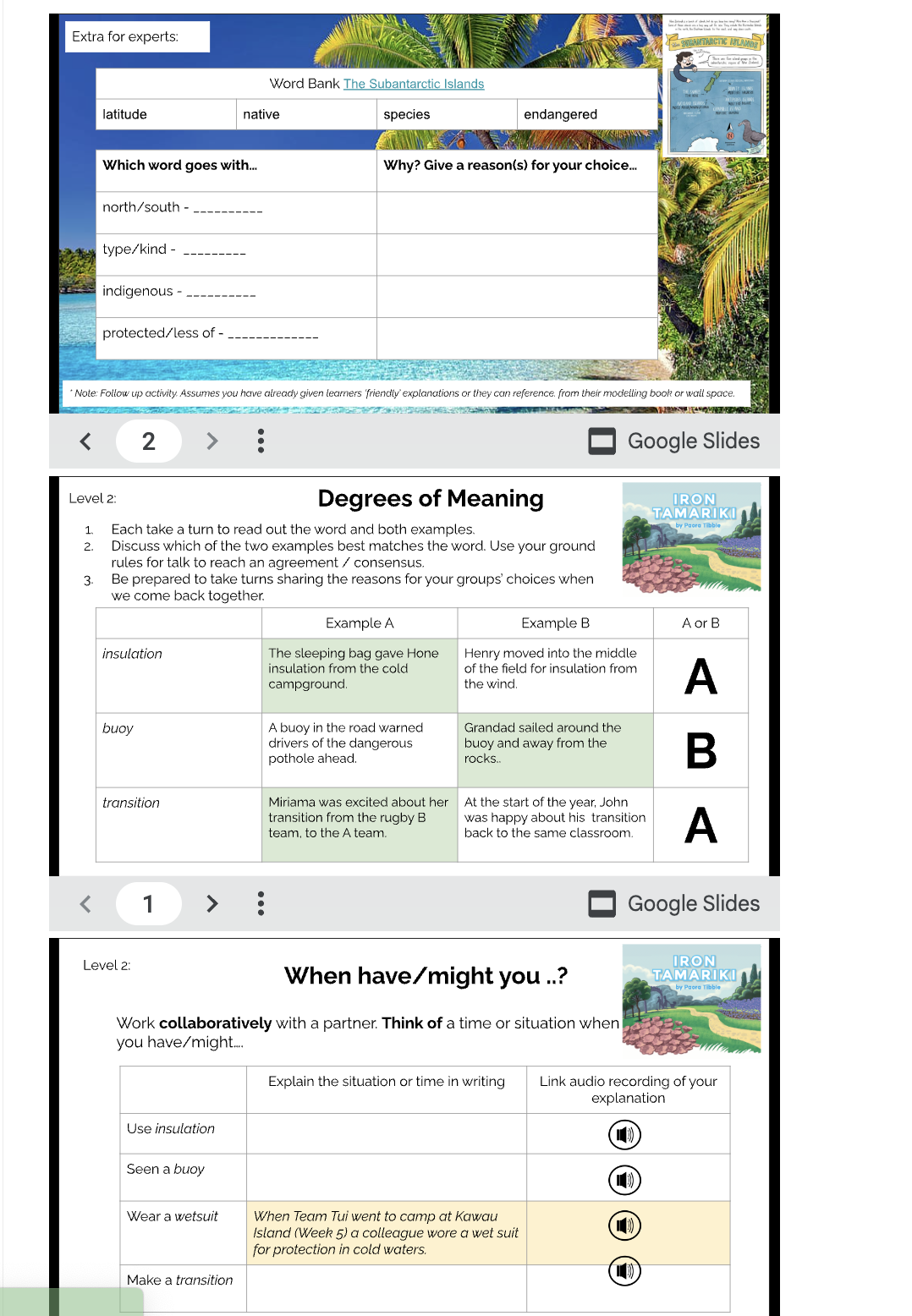
Something I'd like to share is the shift in our task boards. In Terms 2 & 3, our reading task boards looked different - each group had a slide that had must-do activities, a create activity and independent work. It was great to start with but after a term of using it, we found it quite time consuming working on it and had better plans for Term 4's task board.


Our task board for Term 4, is much more manageable. The guided reading sessions/texts are still differentiated but we felt one board was enough for all 3 levels. We still had our Money must-do's, we had our independent activities and we also linked in our guided reading session texts. Students can view the texts before the lesson but as for the teacher notes, we kept that locked. We also included a new tool called 'Mahi Tracker" where students would link their completed work into so we could check it at the end of the day.


Wednesday, October 18, 2023

***Observation - Sandhya from GI Primary

 Today I was fortunate enough to pop into GI Primary and observe Sandhya teach Reciprocal Reading. She heard through the grapevine (colleague Vila) that apparently I teach a good RR lesson :) 

Anyhow, I walked into the classroom feeling quite honoured that she thought I was good enough to observe her. For me, I took it as an opportunity of learning because teachers implement things differently in the class. I really enjoyed how Sandhya executed it in her class. Yes, it can be quite difficult when one has a huge range of learning needs in the classroom but she managed this quite well.

My takeaway was definitely the 'Extended Discussion' part. Sandhya has a really big Level 3 group that consists of about 2/3 of the class. She seats them in groups of 5 (15 learners), they read the text together and after each page, they discuss in their groups what the page was about. Then, summariser from each group will share back their discussion.

Post discussion, Sandhya shares a template with each learner, this doc also works as a graphic organiser. There's a box for each RR role, questioner can write in their questions, clarifier can write in their list of words from the text (that may have needed clarifying), Predictor writes in their predictions etc.

It was a first time for me to see it taught this way. As mentioned before, teachers learn about the programme but we take it and implement it in a way that best fits our learners.


Thursday, September 14, 2023

Blogpost #13: Intervention Tools - RPI Resources and Ideas


A huge drive in our Reading Programme this year has been the implementation of RPI resources and Ideas into our teaching and learning. Being the mentor teacher for our 2 teachers in the RPI programme has helped with the consistency of running it.

Here are some snapshots of some of the RPI learning by the mentee teachers and we have implemented in our teaching for the term. These were also some of the favourites for our students:

 
- Vocabulary activities to help with decoding words


- Word Consciousness activities


- One Shot Film - a unique way of promoting the book you are reading.


- Figurative Language in our Writing to make our writing more effective and appealing to the readers. To also help with painting a visual image in the readers minds.

Upon discussion with my team, we have decided to dedicate at least a week each next term to what has been covered in RPI. Some of those ideas are: 

  • Great Beginnings Writing
  • Figurative Language 
  • One Shot Film
  • Creating visual representation of the book we read
  • Levels of Thinking - Literal, Interpretive & Evaluative
  • Word Associations


Wednesday, August 30, 2023

Blogpost #12: Intervention Tools - changes implemented in teacher practice...(Teacher Workbook)

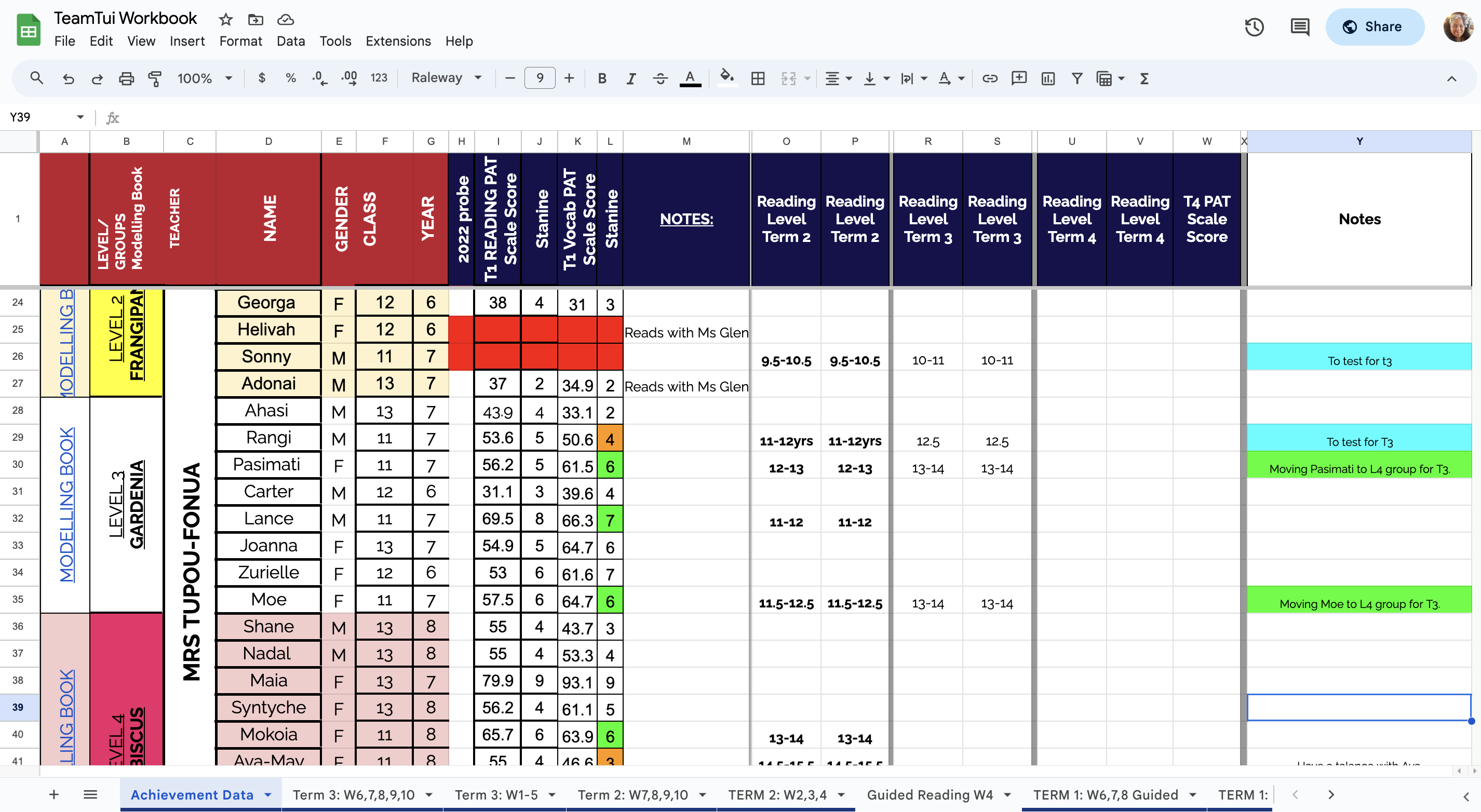
 Thanks to the RPI intervention, we gained a thorough and more in-depth understanding of what a Teacher workbook should consist. We were given an example of a Teacher workbook, teacher modelling book etc. 

As a team, we agreed that it was too much to have different documents. As a teacher, we like to work 'smarter, not harder', so we decided to combine the 2 and title it TEACHER WORKBOOK. In this google spreadsheet, we also have an achievement data tab that includes learners achievement data for reading, from all their assessments between the beginning of year and end of year. This helps us teachers track and monitor the learner and the progress they make throughout the year.


For every couple of weeks, we have a tab that has the learning intentions, deliberate acts of teaching and a column that allows us to reflect on how the lesson went and what we have observed during our guided reading sessions.


These changes have really helped me and my teacher practice around reading. I feel more efficient and I have evidence of the teaching/learning that takes place when I see the students. I also have a 'one stop shop' where I can easily access data for learners and teacher observation anecdotal notes. This will also help me with report writing. Even if parents request to an appointment to check in on their child's learning, the teacher workbook is sufficient enough.